
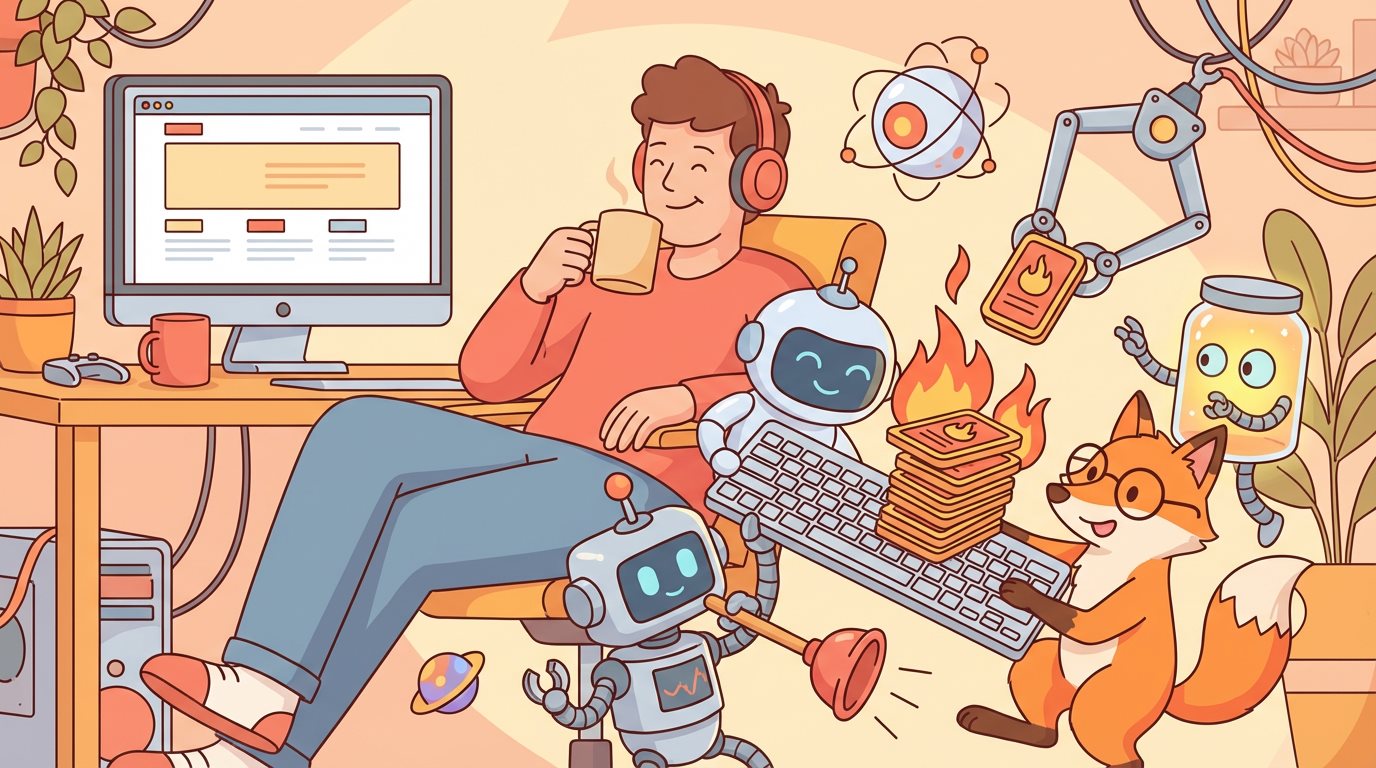
I did the responsible adult thing and introduced six different AI systems to my homelab, my websites, and my family’s meal planning. Then I took notes like a scientist, except the lab safety officer was me, the hazards were “token budget,” and the fire extinguisher was denial.
What I was actually trying to do
IDEs first: I used Antigravity and Cursor to ship and tweak homelab web sites and APIs. The goal wasn’t philosophy; it was “make the UI stop embarrassing me in production.”
Agents and CLIs second: OpenClaw and friends were for lighter experiments—family routines (meal planning), Telegram glue, and general poking at what “capable” means in 2026 without pretending I’m running a research institute.
The IDE verdict (spoiler: they’re unfairly good)
Clear win: user interfaces. Layout, components, copy-paste archaeology, “why is this margin lying”—all of it gets faster. It’s the rare case where the tool matches the fantasy in the marketing PDF.
Clear downside: cost, and the awkward truth that there’s no real long-term memory mechanism baked in. Yesterday’s brilliant refactor is today’s stranger who speaks confidently and remembers nothing.
Keep score: 5/5. I’m not proud of how dependent that makes me; I’m just honest.
OpenClaw: impressive, hungry, and slightly feral
Clear win: it was somewhat easy to set up, and it could span a surprising stack—full-ish website work plus Telegram integration without me inventing twelve new microservices first.
Clear downside: it burns tokens as if they’re free calories. Cheaper models often failed the same tasks the expensive ones handled, which turns “save money” into “pay twice in time.” Documentation also had gaps, which is how you end up with a config file that looks correct, behaves incorrectly, and makes you question your entire career.
Keep score: 3/5. Useful, but you negotiate with it.
The “others” bucket (CLI brain, GUI heart)
Hermes, OpenJarvis, OpenCode, and similar CLI-first tools weren’t bad; they were work. Powerful if you already speak the dialect; unintuitive if you don’t. I kept reaching for training wheels that weren’t there, then felt personally attacked by help text.
Keep score: 2/5 for my brain, on a good day.
If I could keep only two
Cursor stays: IDE muscle plus enough remote/CLI reach that I don’t have to live in six terminals like it’s 1998.
OpenClaw stays as the “for fun / experiments / Telegram mischief” lane—not daily driver, more like a hobby lathe that occasionally makes something beautiful and occasionally throws a bracket across the room.
The serious takeaway, disguised as a joke
Tool sprawl is real. The best stack is the one you can afford, explain to Future You, and actually operate when the cheap model hallucinates and the docs go quiet. Everything else is a podcast episode waiting to happen.
Disclosure: scores are vibes-weighted, homelab-adjusted, and absolutely not a benchmark. Your mileage will vary; your token bill will not apologize.